
Propaganda, Politics, Academy Awards & Film
/“It's easier to fool people than to convince them that they have been fooled.” - Mark Twain (Samuel Langhorne Clemens)
Here is my commentary after sitting through this film — a film that never once mentions the word Palestine, never once criticises Israel, purposefully left out the recordings and forensic evidence where Hind was killed in cold blood, framing her death as though it was an accidental tragedy, emphasising her family is situated in Germany and avoided addressing why they were in Gaza, implying that they accidentally wandered into a “restricted war zone" that they were not meant to be in. Not once addressed Israel or the IOF, they only said "armies". The only time they used the word “Israel” was to coordinate with Israel who was portrayed as benevolently handling the rescue missions that the Palestinian Red Crescent is portrayed as incompetent to manage without them. This is a form of history-revisionism, and needs to be critiqued in how it is placed in the current historic context (see Cedric Robinsons’ critical scholarship). This film also takes advantage of grieving families who are persuaded to participate in the hopes of their loss being used for some good, which we have also seen in projects like The Perfect Neighbor. Hind’s family has put their approval behind many other films and documentaries about this tragedy to help spread awareness, including a Palestian-Jordanian production, which also coordinated with the Palestine Red Crescent Society.
UN Security Council Session
https://forensic-architecture.org/investigation/the-killing-of-hind-rajab
* Edit: I will have to follow up with a proper coded analysis to inform audiences of all the structural problems and obfuscation in this film. This is not just about putting forward a subjective opinion on narrative allegory, but an analysis based on the use of the editing and directing techniques used in this film, that are materially grounded and researched in how they are used to frame audience perception. We witness how techniques are employed in Western media reporting and headlines to obscure the truth — films also employ shaping strategies. Why are we critical of Western news outlets for selective narrative and omission, yet accept it in film? I am putting out these concerns based on professional education and experience, and backed by academic scholarship. We need to understand better what we stand behind. If what we are supporting contributes to harm, then I believe we should have a better understanding of what we are supporting.
Now that I have seen the propaganda piece The Voice of Hind Rajab, here is what I need to say:
If you support this film, you are not an ally to Palestinians. You are not an ally to oppressed people.
This film is about saviourism, history revisionism, and those who are concerned about appearing as a saviour while still wanting to be included in oppressor circles. If you are Palestinian and support this film, you really need to look at yourself and what colonial logics you have internalised*, especially if you are in the diaspora.
Shame on everyone who supports and profits off this film and exploitation of Hind. For all the reasons I posted months ago (see below) when I addressed what to consider around this film, actually sitting through this propaganda really shows how the world CHOOSES to package Palestine.
Shame on everyone that allows this film to contribute to the attempts at our erasure through liberal-zionist logics, and for overshadowing the films that are made by Palestinians — as it was clearly intended to do. Instead of films like Palestine 36 or All That’s Left of You, this film is made to ensure they don’t get placement in awards ceremonies and the platforming that brings. This film is for colonisers to feel better about themselves while they push our films to the side.
— Samantha Youssef
I made this post in September 2025 on social media and will share it here. I had not seen the film yet, but these are comments based on what was publicly available at the time.
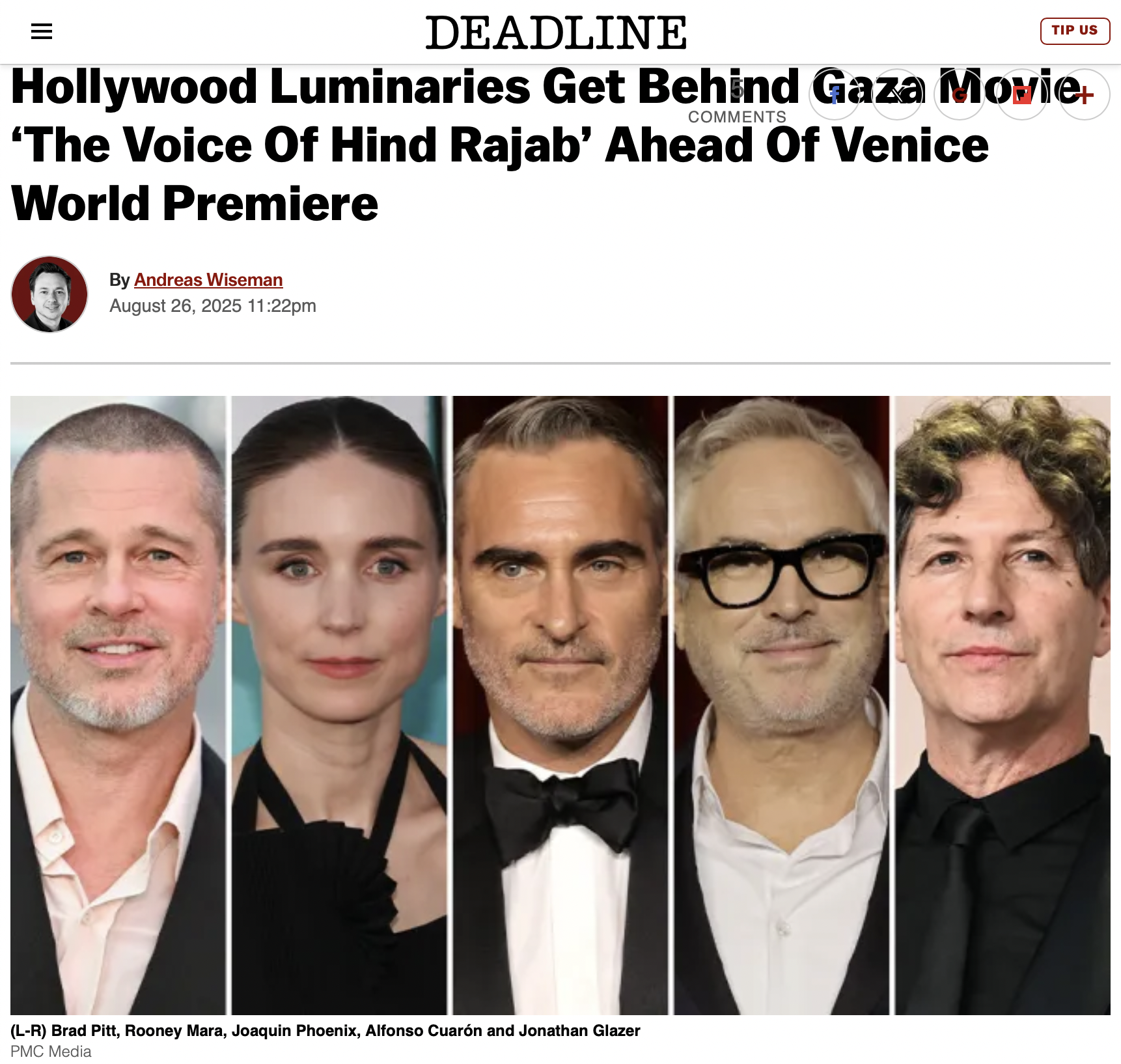
https://deadline.com/2025/08/brad-pitt-joaquin-phoenix-join-gaza-movie-voice-hind-rajab-1236498170/
September 6, 2025.
The Voice of Hind Rajab is a highly problematic film.
To give you some background on where I am positioning this information, I started at Disney and have been working for over two decades in Hollywood. I work as an artistic & animation consultant/director on both animated and blockbuster feature films, advising in a small circle with the directors and executive producers. Check out the IG video essay on Superman.
This film mimics campaigns designed towards upholding imperial soft power structures and Hollywood-washing. Hollywood is trying to co-opt the Pro-Palestine movement (we already know that there is an increase in the propaganda budget for 2025) and there is a massive campaign around coopting and commodifying this. Hollywood is not an isolated actor on the political stage, it is part of an apparatus that cooperates with news media, music, and sports industries, among many other cultural structures. Likewise, directors and actors are not independent contractors, they are employees of agencies that are also corporate organisations.
Some useful points to consider:
This film is promoted by White, neo-liberal, Democrat-supporting, Hollywood heavy-weights, who are only speaking out since Trump was in office (for those following this phenomenon, this is a conversation on its own). They are commodifying Palestinian tragedy and rewriting themselves on the right side of history.
Brad Pitt is also part of/represented by CAA**, a publicly pro-Israeli agency which made a public statement in support of Israel. Those critical of Israel had to resign from the agency. (https://variety.com/2023/film/news/caa-maha-dakhil-resigns-board-israel-social-media-posts-controversy-1235764577/ )
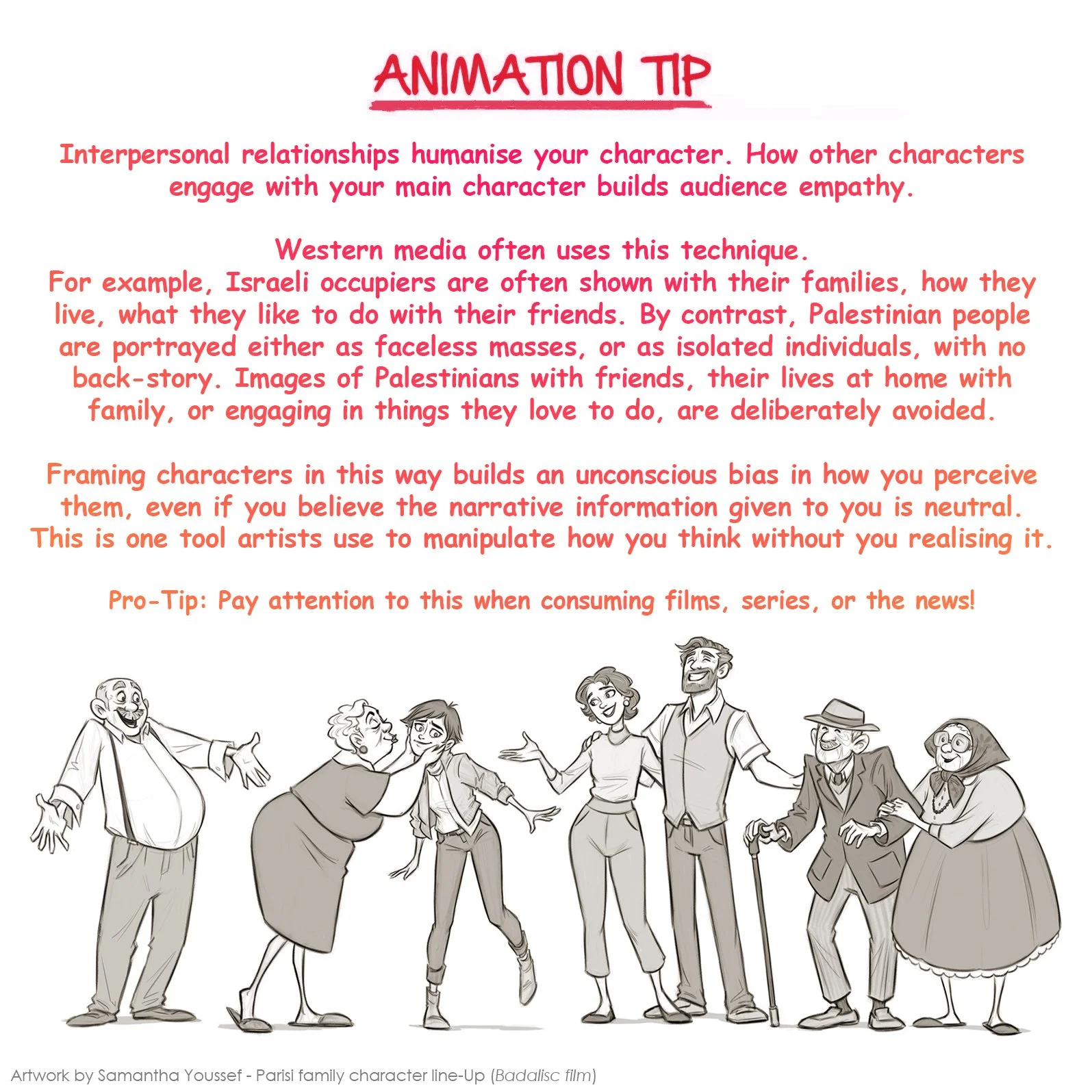
It’s also important to ask why are they all White liberal faces on the promotion of this project and not one Palestinian directing creative? Casting actors does not help, none of the directing, or decision-making roles appear to have a single Palestinian.
Hollywood films (these can also be called First and Second Cinema - for more information look up Third Cinema) are funded by the CIA and Pentagon. Please read the peer reviewed scholarship by Alford & Secker, Lenoir, Der Derian, Stahl, Mirrlees. (American Journal of Economics and Sociology by Matthew Alford and Tom Secker is available here: https://onlinelibrary.wiley.com/doi/10.1111/ajes.12180 )
On Hollywood affiliated productions, directors are not the conceptualisers of the films. Directors and writers are hired by someone else to create a predetermined film. They are picked to appeal to targeted audiences (mainly Americans). Understanding this logic we can see how a Tunisian director from a France-based studio that tours Cannes is an ideal candidate to be sought out for this role, mainly because they are not Palestinian. This: 1) Further distances and orientalises Palestinian voices. 2) All Arabs are the same for their purposes and audiences, and someone more “politically palatable” is preferable.
This film contributes to ensuring that the famous events of the G-cide are remembered, shaped and curated in cultural memory that is in the form that Western interests want.
These films pacify resistance by neutralising radical ideas through narrative justifications, commodify it, and shape the story to uphold American value systems like American exceptionalism and hyper individualised hero-stories. These are key narrative structures that the imperial apparatus wants in films; the CIA is content to prioritise this even at the expense of making the government look bad, because the core idealogical messaging that must be put through offers more value laden returns for hegemony (see Alford & Secker).
One last thing, because they did the same thing with the Black Panther franchise (using Oakland) and Andor (referencing the Battle of Algiers). We need to ask why choose Hind's story? Why not another? These references they use are the most accessible. They go to the easiest access that they think will hold the largest audience impact. They also want to co-opt any narratives that might cause people to start asking questions and reshape history by re-situating the context of these narratives in a way that favours the imperial violence that the US upholds. Because Hind was known among White circles due to Hind's Hall at Columbia University, this was the story that created cracks in the colonial mainstream narrative. This is a common strategy historically repeated, and there is a long paper trail of receipts on these tactics as well.
We also need to ask if these people like Brad Pitt and co. are so altruistic, why aren't they speaking out against the G-cide? why aren't they speaking out about how their studios and industry help R&D and propaganda for the US military? Their promotion of this film aligned with the events of the Freedom Flotilla, where even other celebrities were on the ground supporting it. Why aren't they getting on the flotilla or seeing it off? Even better, why aren't they using their own personal yachts, or the yachts of their society friends to join the flotilla? Why aren't they investing in sending aid to Gaza through its borders? For perspective, the funding given to this film will cost more than the millions of dollars in weapons that Canada just sent to Israel. Why aren't they doing something of material significance to people in Gaza with their money? Instead they are investing in an all White promoted production, hiring a Tunisian employee, and profiting off it. Why are these White company-men owned by pro-Israeli agencies being the ones to be the faces of a Palestinian story and not use their voices to uplift any Palestinians to tell their stories? There are Palestinian screen writers, directors, etc. in the US, as well as in Palestine and other countries.
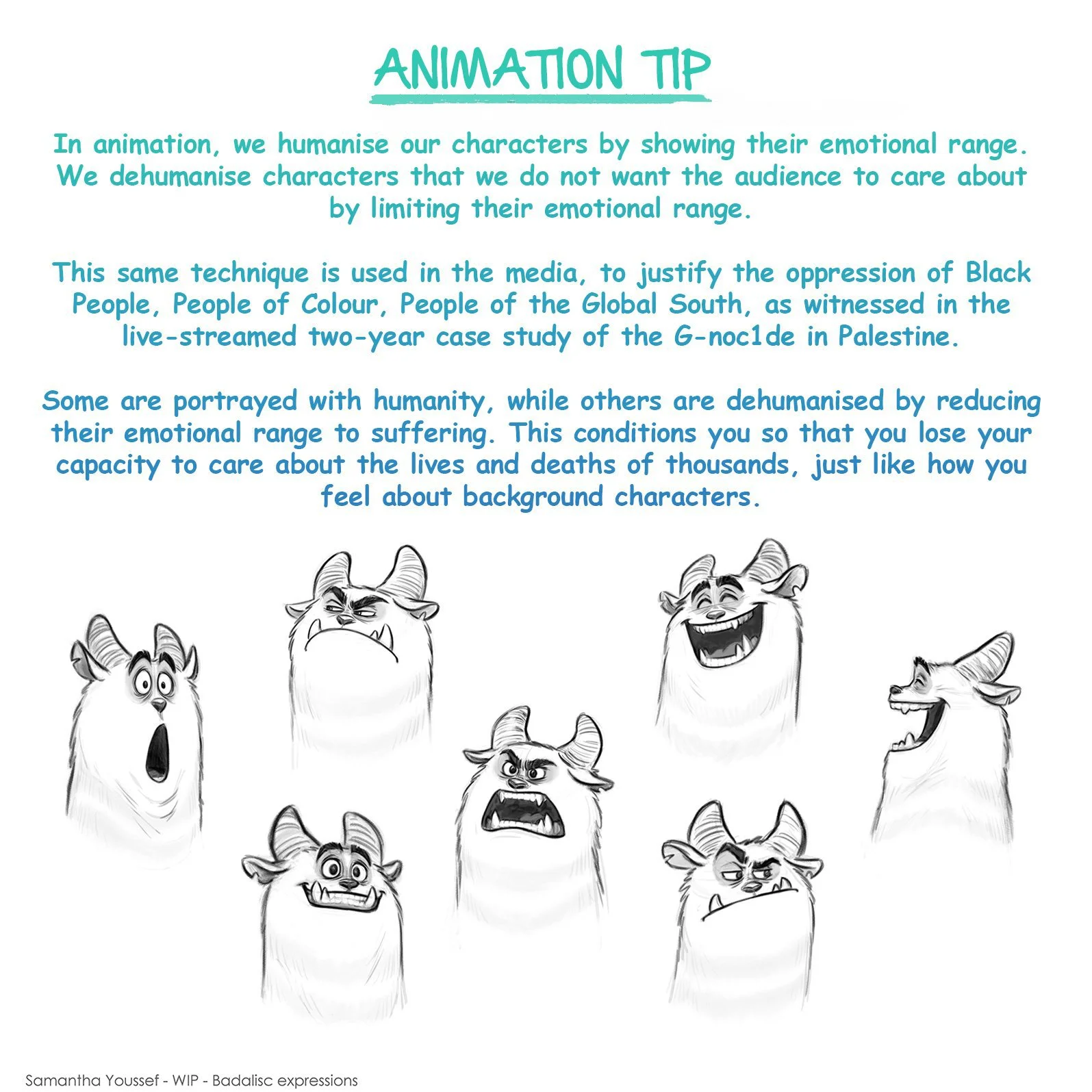
More importantly, and I know I'm being a bit blunt, but as a directing creative on the inside, I have witnessed how effective our work has been on influencing the average person. How visceral and emotional the push back can be from the audiences that we filmmakers — essentially — dupe. When you work at high levels on the inside, it’s very different to what the public thinks it is, and I am constantly astounded at how much people believe in these productions or what we choose to reveal as "behind the scenes". So if there is a knee-jerk response in anyone to be immediately excited about this, or jumps on board to defend or celebrate it without questioning, I think this is what we have to work on unravelling in ourselves and in our socialisation. There is no legitimate logic behind this behaviour when it is interrogated. There is, however, ample documentation in scholarship and journalism that illustrates how, since WW1, and especially WW2, Hollywood is America's greatest soft power asset. What needs to be interrogated is why do we even think figures like these Hollywood celebrities have anything of value to contribute morally or intellectually, and why do we rely on, and promote, their approval. This reflects poorly on us as a whole, the celebrity obsession reflects how easily we are persuaded.
It’s a really depressing testament to how good we are at our jobs that people are so desperate to have their story told by this system that they will promote it.
At ‘best” this film is racist, at worst it is sinister and nefarious.
— Samantha Youssef
Additional added notes:
* Understand what is legally defined as anti-Palestinian racism https://antipalestinianracism.org/, here is the full legal report.
** France billionaire, Francois-Henri Pigault, completed the acquisition of a majority stake in CAA in September 2023. Tanit Films is a France based studio. CAA is the official North American distributor of the film The Voice of Hind Rajab.